Dextra Light
Featured UVC Disinfection Systems
Premium germicidal components certified to international safety and efficacy standards.
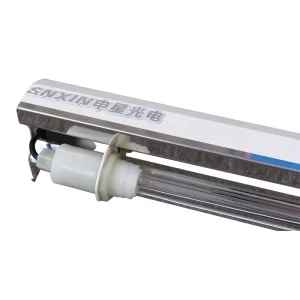
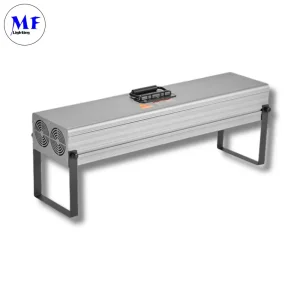
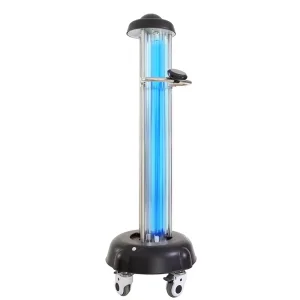
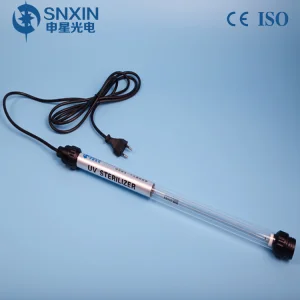
Global Landscape & Market Drivers
The transition toward mechanical hygiene: How modern HVAC systems are adopting UVC disinfection kits globally.
The Post-Pandemic Paradigm Shift in Air Bio-Security
In contemporary building operations, Indoor Air Quality (IAQ) has progressed from a secondary comfort parameter to a fundamental public health and liability metric. The emergence of airborne threats and resistant pathogens has shifted global regulatory expectations. According to building engineering consortia like ASHRAE (American Society of Heating, Refrigerating and Air-Conditioning Engineers) and the European REHVA, traditional mechanical filtration (such as MERV 8 or 13) is often insufficient on its own to control sub-micron viral and bacterial particulate transmission without causing high pressure drops and excessive energy consumption.
This is where Ultraviolet Germicidal Irradiation (UVGI), delivered through inline UVC HVAC disinfection kits, has become the global baseline for engineering controls. By projecting electromagnetic radiation at the specific germicidal band of 253.7 nm, these systems disrupt the DNA and RNA structural bonds of pathogens, rendering them unable to replicate. The market demand has transitioned from optional retrofits to standardized integrations in new-build Air Handling Units (AHUs).
Regulatory Drivers & CE Compliance
For European and international procurement, CE Certification is not merely a label; it represents verified compliance with Low Voltage Directives (LVD), Electromagnetic Compatibility (EMC) regulations, and photobiological safety standards (EN 62471). This ensures that UVC emission is effectively contained, ozone generation is strictly controlled, and electrical ballast units operate safely under continuous industrial thermal profiles.
Energy Optimization & Coil Maintenance
Beyond sterilization, UVC HVAC kits play a major role in building energy management. By mounting kits adjacent to cooling coils, the constant exposure prevents biological film accumulation. This bio-film, which acts as a thermal insulator on heat exchangers, increases pressure drop and forces fans to run faster. Continuous UVC irradiation maintains coil cleanlines, yielding heat transfer efficiency improvements of up to 15% and lowering total system fan power consumption.
Technical Roadmap & Disinfection Engineering
A deep dive into dosage calculation, photolytic engineering, and integration architecture.
D90 Dosage Principles
Disinfection efficacy is determined by the "UV Dose", calculated as Intensity (μW/cm²) multiplied by Exposure Time (seconds). Our kits are engineered using computational fluid dynamics (CFD) to deliver the critical D90 dose (the energy required to reduce a pathogen load by 90%) even at high duct air velocities exceeding 2.5 m/s.
Low-Pressure Mercury vs. Excimer
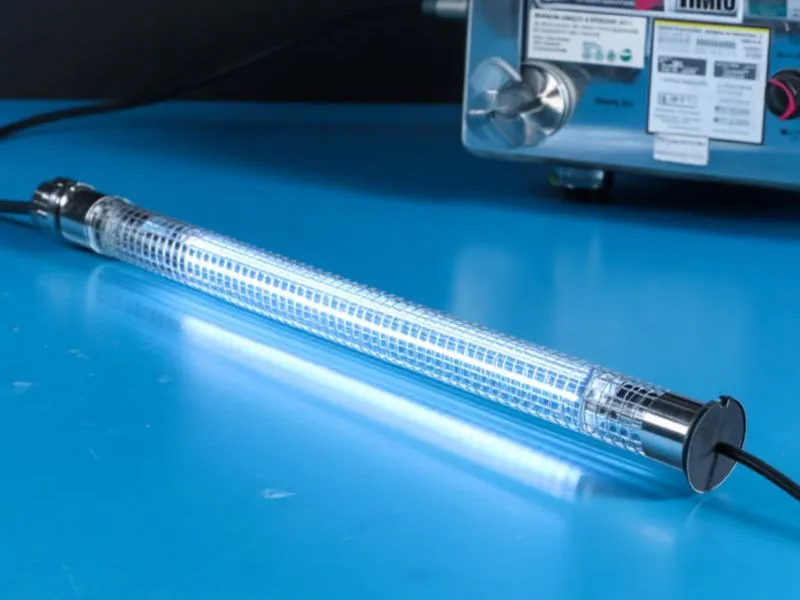
While low-pressure mercury vapor lamps (emitting at 253.7nm) remain the benchmark for high-output air stream sterilization, our R&D roadmap focuses on Excimer technology (222nm Far-UVC) for human-present environments, and high-density UV-C LED arrays (SMD3535) for specialized space configurations.
Custom Ballast Calibration
Lamps are only as stable as their electrical driver components. Our kits utilize high-frequency, smart electronic ballasts that feature lamp status indication, dry contacts for building management system (BMS) integration, and soft-start technology to extend effective lamp operating life past 9,000 hours.
Industrial OEM/ODM Capabilities & Factory Profile
Partnering with a leader in RGB displays and high-precision excimer & low-pressure UV lamps.
Zhongshan Dextra Lights Technology Co., Ltd.
Established in March 2012, Zhongshan Dextra Lights Technology Co., Ltd. is a private high-tech enterprise specializing in the production, sales, and R&D of multi-purpose LED display screens and excimer UV lamps. Our core R&D personnel bring over 15 years of technical expertise in the RGB display and UV engineering industries. Backed by solid financial reserves, the company launched with an initial capital investment of 10 million yuan.
Operating out of a modern manufacturing facility covering approximately 9,000 square meters, the company employs over 120 skilled professionals. Our infrastructure includes a well-equipped, large-scale research and development center, a modern production hub, and technical engineering test facilities, supported by 10 professional elites recruited from domestic and international markets.
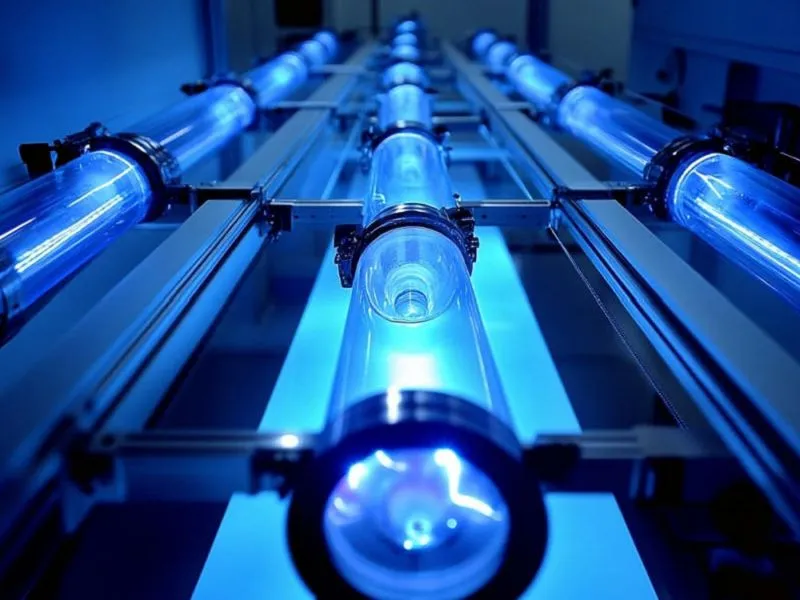
Advanced Manufacturing & Scalable Output
Dextra Lights features a high-throughput industrial floor equipped with 4 automated production lines and 36 VPM high-speed placement machines. This layout enables high precision and rapid scalability for global procurement needs.
Last year, our total consolidated sales volume reached RMB 270 million. A significant portion of this success is driven by our UV disinfection line, which accounted for 37.8% of our total sales, demonstrating a robust annual sales growth rate of over 9.2%. We believe that innovation is the life force of any manufacturing enterprise. To sustain this trajectory, we maintain a portfolio of 50 domestic patents and actively invest in product innovation.
Diverse Application Portfolio
Our components and systems serve public spaces, transportation systems, and residential setups. Our engineered line features:
- Indoor and Outdoor LED displays for media, staging, and exhibitions
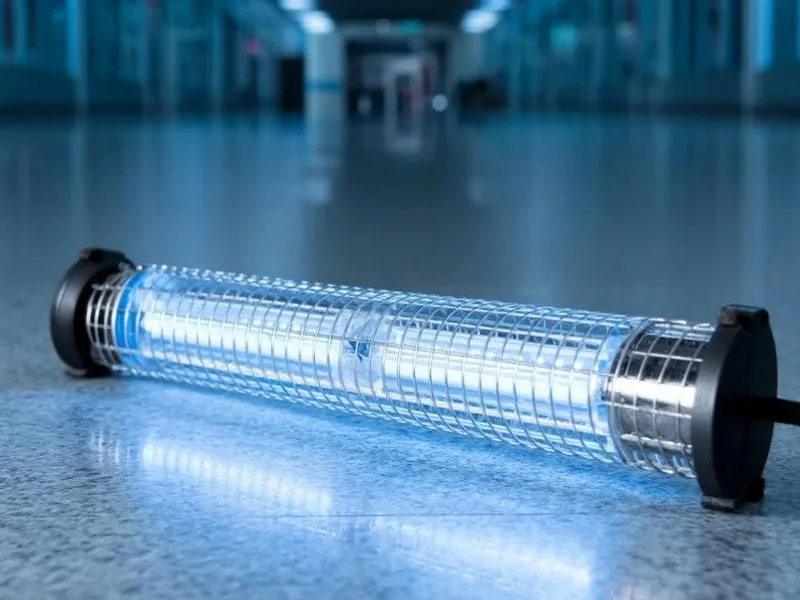
- In-duct and surface UV disinfection lamps for building retrofits
- Maternal, infant, and residential disinfection appliances
- Pet deodorization and microbial control devices
- UV semiconductor sub-assemblies & clean-room air purifiers
- Advanced UV industrial dust removal modules
Why Choose Dextra Lights Technology
A reliable supply chain for global distributors, mechanical contractors, and system engineers.
Advanced Production Capacity
Four automated production lines and 36 high-speed placement machines support efficient, scalable, and high-precision manufacturing.
Quality Assurance
Every batch comes with a detailed inspection report, ensuring transparency and confidence for global buyers.
Sales Markets
Products are sold in over 80 countries across Europe, America, the Middle East, Africa, and Southeast Asia, backed by a complete sales and service network.
Customized Solutions
We analyze each client's application scenario and business goal to design tailored solutions that deliver maximum value and efficiency.
Macro Solutions & Localized Applications
Optimizing mechanical system design for localized environments, regional regulatory demands, and custom air profiles.
Cold Storage & Fresh Supply Chain
High humidity levels in cold chain food processing and preservation promote mold growth on cooling coils and overhead air ducts. Integrated UVC solutions (such as our 80W cold storage sanitizing systems) operate reliably at low temperatures to prevent cross-contamination and prolong product shelf-life without chemical residues.
Healthcare & High-Risk Areas
Hospital and clinical settings require sustained pathogen eradication. In-duct UVC systems are integrated alongside MERV 14+ filtration to eliminate hospital-acquired infection (HAI) vectors, such as Mycobacterium tuberculosis and Influenza, within centralized AHU configurations.
Public Terminals & Transit Hubs
Airports, railway hubs, and shopping plazas experience varying occupancy levels. Our integrated UVC control kits adjust intensity dynamically using air volume sensors, ensuring safe sanitization levels while optimizing energy consumption.
Technical & Regulatory FAQ
Answering key queries on integration, engineering calculations, and safety certifications.
What is the standard lifetime of UVC germicidal lamps within HVAC systems?
Most low-pressure mercury vapor germicidal lamps have a rated effective operational lifetime of 9,000 to 12,000 hours. Although the lamp may continue to emit a visible blue glow beyond this duration, the germicidal UV-C output declines over time. We recommend scheduled annual replacement intervals to maintain performance target levels.
Why is CE Certification critical for UVC HVAC retrofit modules?
CE Certification indicates that the equipment complies with European safety guidelines, specifically LVD (Low Voltage Safety) and EMC (Electromagnetic Compatibility). Without proper CE marking, contractors risk liability issues, integration hazards, and safety violations under standard building codes.
Do these disinfection kits produce ozone?
Our standard UVC lamps operate at 254nm, using quartz structures that block the 185nm ozone-producing wavelength. These models are ozone-free and safe for continuous use in occupied commercial structures. For specific industrial applications, we also manufacture select 185nm ozone-generating lamps to support localized deodorization requirements.
How is in-duct air sterilization sizing determined?
Sizing calculations depend on air duct dimensions, air velocity, temperature, humidity levels, and target pathogens. By assessing these variables, we determine the required UV-C lamp length, wattage, and spatial layout configuration to achieve the desired pathogen reduction rate.
Complete Germicidal & UV Lamp Portfolio
Explore our industrial range of replacement lamps, insect-trapping fixtures, and specialty UV bulbs.