As we step into 2026, a significant shift is occurring in healthcare through advanced ultraviolet (UV) technology. This innovation is altering how medical facilities approach patient care and hygiene. How UV technology is used in healthcare has become a vital area of exploration, influencing everything from sterilization practices to infection control.
In hospitals, UV light is increasingly utilized to disinfect surfaces and equipment efficiently. This method reduces the incidence of healthcare-associated infections. Meanwhile, UV technology is also being integrated into devices that enhance air quality, promoting a healthier environment. However, the implementation of UV technology is not without challenges. Concerns about safety and effectiveness must be addressed to optimize its use.
The journey towards adopting UV technology is complex. While many are excited about its potential, the healthcare sector must critically assess its limitations. Striking a balance between innovation and safety is key. As we explore how UV technology is transforming healthcare, we recognize both its promise and the need for ongoing evaluation.
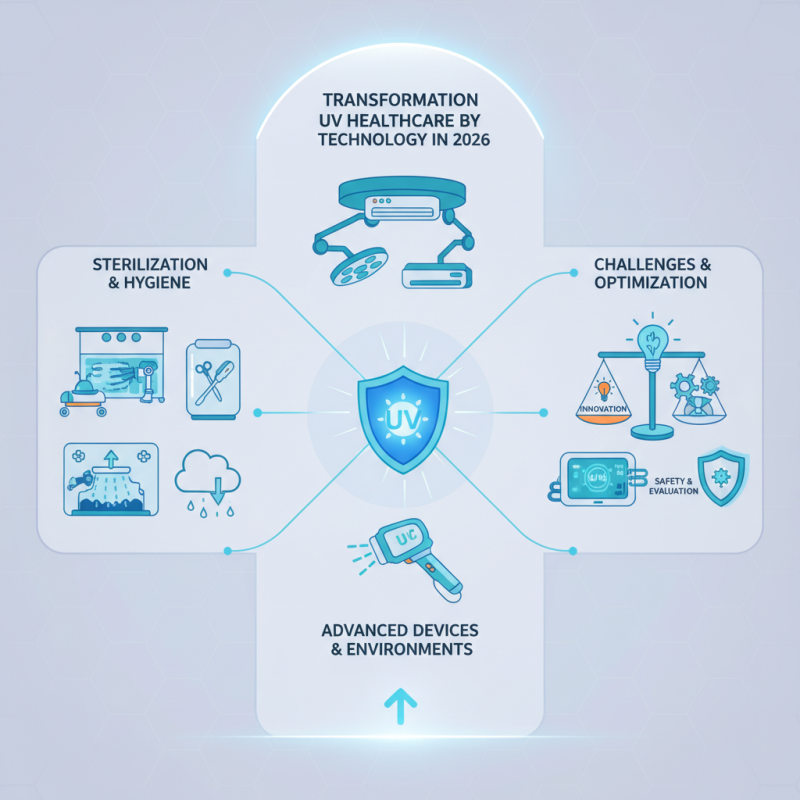
The Evolution of UV Technology in Healthcare by 2026
The landscape of healthcare is continuously evolving, and by 2026, ultraviolet (UV) technology is expected to play a crucial role. This evolution focuses on its application in sterilization, diagnostics, and treatment. UV light offers an efficient way to reduce pathogens in hospitals, leading to safer environments for patients and healthcare workers alike.
In 2026, deployment of UV technology will not only enhance cleanliness but also speed up diagnostic processes. Researchers are exploring UV light's potential in detecting diseases, such as skin cancer, much earlier than conventional methods. Accessible and cost-effective solutions will broaden its adoption. However, challenges remain in optimizing UV exposure for effective results while ensuring safety.
Tips: Ensure proper training for healthcare staff to handle UV devices safely. Regularly assess the effectiveness of UV sanitation processes. This will help in continuously improving patient safety measures. Remember, while UV technology shows promise, consistent evaluation is key to its success.
Key Applications of UV Technology in Medical Settings
UV technology is reshaping healthcare in 2026, revealing key applications in medical settings. One significant use is disinfection. Hospitals now apply UV-C light to sanitize surfaces and equipment. This method reduces hospital-acquired infections, a persistent challenge in healthcare.
Another vital application is in air purification. UV light systems are installed in HVAC units. They target airborne pathogens. Studies demonstrate that hospitals using these systems have lower infection rates. Patients breathe cleaner air, leading to better health outcomes.
Despite the benefits, some concerns remain. The effectiveness of UV technology depends on proper implementation. Shadows and surfaces may escape treatment, raising questions about thoroughness. Continuous monitoring is essential to ensure safety and compliance. As adoption increases, ongoing research will guide best practices for this evolving technology.
How Is UV Technology Transforming Healthcare in 2026 - Key Applications of UV Technology in Medical Settings
| Application |
Description |
Benefits |
Estimated Adoption Rate (%) |
| Disinfection of Surgical Tools |
Utilizing UV-C light to eliminate pathogens on medical instruments between procedures. |
Increased safety for patients, reduced infection rates. |
85% |
| Air Purification in Hospitals |
Installation of UV filters in HVAC systems to neutralize airborne pathogens. |
Improved air quality, lower transmission of airborne diseases. |
90% |
| Surface Sterilization |
Using UV light to sanitize surfaces in patient areas and waiting rooms. |
Quick disinfection process, reducing the risk of surface transmission. |
75% |
| UV Therapy for Skin Conditions |
Treatment using controlled UV exposure for conditions like psoriasis and eczema. |
Effective treatment, with fewer side effects than some medications. |
70% |
| Testing and Research in Pathogen Resistance |
Using UV technologies to study microbial resistance and develop new treatments. |
Innovative solutions to combat resistant infections. |
65% |
Benefits of UV Technology for Infection Control and Sterilization
In 2026, UV technology is revolutionizing infection control and sterilization in healthcare settings. The CDC reported that UV-C light can reduce pathogens by up to 99.9% in just minutes. This efficiency is crucial in environments like operating rooms and intensive care units, where infection risk is high.
UV technology offers several benefits. It is chemical-free and safe for equipment, unlike traditional disinfectants. Moreover, it ensures comprehensive coverage, reaching areas that manual cleaning may miss. A recent study highlighted that hospitals using automated UV systems saw a 30% reduction in hospital-acquired infections. Such staggering results push many facilities to adopt this technology.
Tip: Regularly monitor UV systems to maintain effectiveness. Buildup on UV lamps can significantly reduce performance.
While the advantages of UV technology are compelling, there are challenges. Not all surfaces respond equally to UV treatment. Some materials may degrade with prolonged exposure. Continuous staff training is essential to optimize UV use without compromising safety.
Tip: Consider integrating UV technology into existing cleaning protocols gradually. This can help staff adjust and ensure proper use.
Innovations in UV-C Devices for Patient Care and Safety
In 2026, innovations in UV-C technology are reshaping patient care and safety in healthcare settings. Recent studies indicate that UV-C light can reduce pathogens on surfaces by up to 99.9% within minutes. This efficiency greatly enhances infection control protocols in hospitals, particularly in high-risk areas such as operating rooms and intensive care units.
Moreover, the deployment of UV-C devices includes portable units for rapid disinfection of patient rooms. Hospitals that have integrated these devices report a significant decrease in healthcare-associated infections (HAIs), supporting patient recovery and safety. It is estimated that effective disinfection protocols can cut HAIs by as much as 30%. Implementing UV technology is not without challenges. Concerns about the safety of UV exposure to staff and patients have prompted ongoing research to optimize device designs.
Additionally, while the benefits of UV-C technology are clear, there remains a need for more extensive training. Many healthcare professionals lack knowledge about optimal usage and maintenance of these devices. Emphasizing training and best practices is essential to capitalize on the full potential of UV-C innovations. As 2026 approaches, the healthcare industry must critically evaluate how to balance technology implementation with patient and staff safety.
Impact of UV-C Technology on Healthcare in 2026
Impact of UV Technology on Healthcare Outcomes and Efficiency
In recent years, ultraviolet (UV) technology has gained traction in the healthcare sector.
Hospitals worldwide are increasingly adopting UV disinfection systems. According to a report from
the Healthcare Infection Society, UV light can reduce pathogens by up to
99.9%. This dramatic decrease helps combat hospital-acquired infections,
which affect millions annually.
Efficiency is another notable benefit of UV technology. A study by the American Journal of Infection Control
revealed that UV disinfection tools reduced the time needed for surface cleaning by
40%. This allows healthcare staff to focus more on patient care. Yet, it's
essential to recognize that while UV technology offers significant advantages, it is not a one-size-fits-all solution.
Proper training is crucial to maximize its effectiveness.
Moreover, the integration of UV technology into daily practices raises new challenges. For instance, worries about
human exposure to UV light must be addressed. Hospitals need comprehensive safety protocols to protect staff
and patients. Balancing efficiency with safety is an ongoing conversation in the healthcare community.
FAQS
: UV technology can reduce pathogens by up to 99.9% in minutes, especially in high-risk areas.
UV light is used for disinfecting surfaces, equipment, and air purification, reducing infection rates.
Shadows and surfaces can escape treatment, necessitating continuous monitoring for thoroughness and safety.
Yes, it's chemical-free and safe for equipment, but regular training is essential for effective use.
Some surfaces may not respond well to UV light, and staff may need ongoing training for safe usage.
Regularly monitor systems for effectiveness and integrate UV technology into existing cleaning protocols gradually.
UV systems installed in HVAC units target airborne pathogens, leading to cleaner air and better patient outcomes.
Some materials may degrade with prolonged UV exposure, which requires careful implementation and monitoring.
Proper training for healthcare staff is crucial for safely operating UV devices and optimizing their effectiveness.
No, it should complement existing cleaning protocols, as it may not cover all surfaces adequately on its own.
Conclusion
The article "How Is UV Technology Transforming Healthcare in 2026" explores the significant evolution of UV technology in the medical field. By 2026, UV technology is being harnessed in various key applications, ranging from disinfection and sterilization to enhancing patient care. This innovative approach has proven particularly beneficial for infection control, with UV-C devices being utilized to improve safety protocols and reduce the transmission of pathogens.
Moreover, the article discusses how UV technology is used in healthcare to boost overall efficiency and outcomes. The advancements in UV-C devices not only facilitate optimal sterilization processes but also contribute to a safer environment for patients and healthcare professionals alike. As healthcare continues to embrace these innovations, the impact of UV technology on public health is expected to be profound, leading to safer medical settings and improved patient experiences.
 Dextra Light
