China Top 10 Ways UV Light Improves Water Purification Solutions?

Time:2026-05-01 Author:Amelia
0%

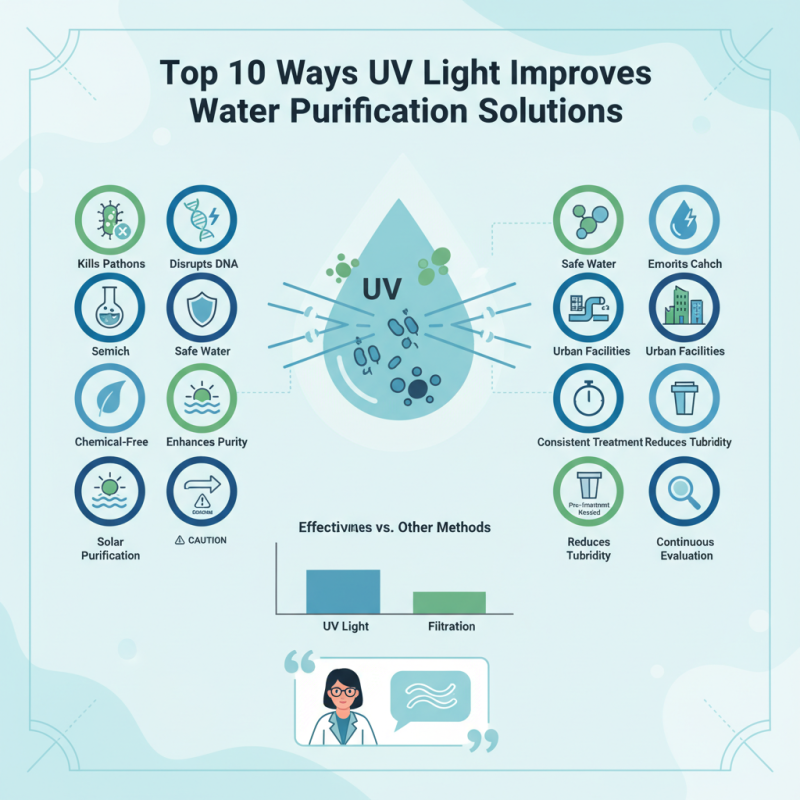
Water purification is a critical issue worldwide, and the role of UV light in this process cannot be underestimated. Dr. Lisa Chen, an expert in water treatment technologies, states, “UV light offers a powerful, chemical-free way to ensure water safety.” Her insights highlight the importance of exploring how UV light helps in water purification.

UV light technology works by disrupting the DNA of microorganisms, rendering them incapable of reproduction. This method significantly reduces levels of harmful pathogens, making water safer for consumption. Many urban centers are investing in UV systems to enhance their water treatment facilities. In rural areas, solar UV devices are providing sustainable alternatives.

However, not every UV light system is perfect. Inconsistent exposure times can lead to insufficient purification. Moreover, relying solely on UV light without pre-treatment might result in unaddressed turbidity. It's crucial for users to understand these nuances. While UV light significantly enhances water purification, continuous evaluation and adjustment to systems are necessary to ensure water quality standards are met.
China Top 10 Ways UV Light Improves Water Purification Solutions?

Top 10 Benefits of UV Light in Water Purification Systems

UV light plays a crucial role in enhancing water purification systems. Its effectiveness comes from its ability to inactivate harmful microorganisms. These include bacteria, viruses, and protozoa. Unlike chemical treatments, UV light does not introduce any harmful substances into the water. This ensures that the water remains safe and clean for consumption.

One of the noteworthy benefits of UV light is its speed. The purification process takes only a few seconds. This quick action is vital for both households and large-scale water treatment facilities. Moreover, UV light is highly efficient. It can eliminate up to 99.99% of pathogens without altering water's taste or odor. This makes it an appealing choice for many.

However, relying solely on UV systems has its challenges. They require clear water to work effectively. If the water is murky, the UV light might not penetrate as needed. Regular maintenance is also crucial to ensure the UV lamps are functioning correctly. Furthermore, UV systems do not remove chemical contaminants; additional methods may be necessary for comprehensive purification. This complexity reminds us that no single solution is perfect.

Understanding UV Light's Mechanism in Eliminating Pathogens

Understanding UV light's mechanism in eliminating pathogens is crucial for effective water purification. UV light operates by emitting short-wavelength ultraviolet radiation. This radiation penetrates the cell walls of microorganisms. It disrupts their DNA or RNA, rendering them unable to reproduce. As a result, harmful pathogens are neutralized. This process is effective against bacteria, viruses, and protozoa, making UV light a powerful tool.

In practical applications, UV systems offer several advantages. They do not introduce chemicals into the water, preserving its taste and quality. The process is quick, requiring just seconds of exposure to UV light. However, certain limitations exist. For example, UV light cannot remove physical particles or sediments from water. Pre-filtration systems are often necessary. Additionally, the effectiveness of UV treatment can be affected by water clarity. Cloudy or turbid water may need additional treatment to ensure optimal UV penetration.

Understanding the role of UV light in water purification highlights both its strengths and weaknesses. Continuous advancements in technology aim to enhance its capabilities. Exploring these aspects contributes to a deeper understanding of water safety and treatment methods. The goal is to find the best solutions for clean and safe drinking water.

Comparison of UV Purification Efficiency vs. Chemical Methods

Ultraviolet (UV) light offers a promising approach to water purification. Its efficacy lies in its ability to deactivate pathogens, unlike traditional chemical methods. Chemical treatments can leave harmful residues or alter water taste. In contrast, UV treatment is residue-free and maintains the quality of water. However, effectiveness can vary based on water quality and turbidity levels.

Consider this: UV light purifies by disrupting the DNA of microorganisms. This action halts their reproduction, effectively neutralizing harmful agents. Yet, UV systems need regular maintenance to operate optimally. Factors like lamp intensity and water flow rate must be monitored closely.

Tip: Always test your water quality before employing UV treatment. This ensures the system meets specific purification needs. Regularly replace UV lamps to ensure consistent performance. Understanding these details enhances the reliability of UV purification. Choosing the right method involves more than just convenience—it requires an analysis of effectiveness based on water conditions.

China Top 10 Ways UV Light Improves Water Purification Solutions

This chart presents the effectiveness of UV light in various aspects of water purification compared to traditional chemical methods. As shown, UV light excels in bacteria removal, virus inactivation, and overall eco-friendliness, making it a leading choice in modern water treatment technologies.

Impact of UV Technology on Water Quality Standards and Compliance

Ultraviolet (UV) technology has reshaped water purification by enhancing water quality standards. Recent studies show that UV light can effectively eliminate up to 99.9% of harmful microorganisms. This includes bacteria, viruses, and protozoa, which traditional methods might miss. With increased global focus on safe drinking water, UV systems align with stringent environmental regulations.

The effectiveness of UV light is backed by reports stating that it can meet the WHO’s water quality guidelines. It acts swiftly and leaves no harmful residues. This means water remains safe without altering its chemical composition. Notably, UV systems can operate efficiently under various water conditions, making them suitable for diverse applications. However, there are challenges; for instance, water clarity can impact UV effectiveness.

Tips: Regular maintenance of UV systems ensures optimal performance. Regular assessments of water turbidity can help identify potential issues. Always monitor UV lamp intensity; a decrease may indicate the need for replacement. Understanding these elements is crucial to uphold compliance with water standards. Data suggests that industries incorporating UV technology experience fewer compliance issues. However, continual education on system operation is necessary for success.

China Top 10 Ways UV Light Improves Water Purification Solutions

Method Description Impact on Water Quality Compliance Standard
Disinfection Uses UV light to eliminate bacteria and viruses. Reduces pathogen levels significantly. Meets WHO guidelines for safe drinking water.
Chemical Reduction Decomposes harmful chemicals like chlorine. Improves taste and odor of water. Aligns with environmental safety standards.
Algae Control Inhibits algae growth in water bodies. Enhances aesthetics and oxygen levels. Regulations for aquatic environments.
Turbidity Reduction Clears water by breaking down particulate matter. Promotes clearer water visibility. Meets clarity standards for potable water.
Cost-Effectiveness Reduces costs compared to traditional methods. Increases budget efficiency for water treatment. Economic viability assessments.
No Harmful Residues Leaves no chemical residues in treated water. Ensures safe consumption without pollutants. Complies with health standards.
System Versatility Applicable in various sizes of water systems. Flexible for both small and large applications. Adaptable to different regulatory frameworks.
Eco-Friendly Solution Utilizes natural UV light. Supports sustainability efforts. Aligns with international environmental policies.
Regulatory Compliance Easily meets local and national water regulations. Facilitates lawful water purification practices. Documents and reports for compliance.

Case Studies: Successful Implementation of UV Systems in China

In recent years, the implementation of UV water purification systems has shown significant success across various regions of China. A case study in Beijing demonstrated a 90% reduction in E. coli levels when UV technology was applied. This aligns with the findings from the China Water Source Protection Report, which states that UV irradiation can effectively neutralize over 99.9% of harmful pathogens.

In Shanghai, a large-scale UV system was integrated into the municipal water supply. This project highlighted challenges in maintaining optimal UV intensity due to varying water quality. However, after implementing advanced monitoring systems, operators observed a constant improvement in water safety. The efficiency of these systems resulted in a more than 30% decrease in chemical use.

Despite these advancements, some areas still face obstacles. In rural regions, the initial costs of UV installation can be a barrier. Additionally, public awareness of UV benefits remains low. Thus, continuous education on water safety is essential. These case studies reflect both the effectiveness and the ongoing challenges of UV technology in China’s water purification landscape.

FAQS

: How does UV light eliminate pathogens?

: UV light emits short-wavelength radiation. It disrupts DNA or RNA in microorganisms, rendering them unable to reproduce.

What are the main advantages of UV water purification systems?

They do not add chemicals, preserving water taste. The purification process is quick and efficient.

Are there limitations to using UV light for water treatment?

Yes, UV light cannot remove physical particles or sediments. Pre-filtration may be necessary to ensure effectiveness.

How does water clarity affect UV treatment?

Cloudy or turbid water can impede UV light penetration. Additional treatment may be needed to enhance UV effectiveness.

What maintenance tips are essential for UV systems?

Regular maintenance is key. Monitor water turbidity and UV lamp intensity for optimal performance and compliance.

How effective is UV light in meeting water quality standards?

UV light can eliminate up to 99.9% of harmful microorganisms. It meets WHO water quality guidelines effectively.

What challenges do UV systems face in water purification?

Water clarity is a major challenge. Changes in turbidity can affect the effectiveness of UV treatments.

How often should UV lamp intensity be checked?

It should be monitored regularly. A decrease in intensity may indicate that the lamp needs replacement.

What impact does UV technology have on water quality compliance?

Industries using UV technology see fewer compliance issues. Continuous education on operations is crucial.

What should be considered when using UV systems in different applications?

UV systems function well under various conditions but require regular assessments for turbidity and overall system performance.

Conclusion

The article titled "China Top 10 Ways UV Light Improves Water Purification Solutions" explores the significant advantages of ultraviolet (UV) light in enhancing water purification systems. It begins by detailing the top ten benefits, highlighting UV light's effectiveness in eliminating harmful pathogens without the use of chemicals. Understanding how UV light helps in water purification reveals its mechanism, which disrupts the DNA of microorganisms, effectively preventing their reproduction and rendering them harmless.

The comparison between UV purification efficiency and traditional chemical methods underscores the former's superior effectiveness in maintaining water quality standards and compliance. Furthermore, the article presents successful case studies demonstrating the implementation of UV systems in various regions of China, illustrating their positive impact on public health and environmental sustainability. Overall, the article showcases UV technology as a crucial element in modern water purification solutions.

Amelia

Amelia

Amelia is a seasoned marketing professional with a wealth of expertise in our company’s core offerings. With an unwavering passion for driving growth and innovation, she plays a pivotal role in shaping our marketing strategies and enhancing brand visibility. A key aspect of her responsibilities......