How to Choose Future UV Sterilization Technology

Time:2026-10-09 Author:Sienna
0%

Choosing a future UV sterilization system requires more than comparing lamp power or purchase prices. The right technology must match the application, exposure area, airflow, materials, and operating schedule. A hospital corridor, food-processing line, and water-treatment unit face different contamination risks. They also require different validation methods.

In practical evaluations, UV-C performance depends on delivered dose, not advertised wattage alone. Dust on a lamp, uneven airflow, and hidden shadows can reduce effectiveness. A reliable system should include calibrated sensors, clear maintenance records, and documented testing procedures. It should also protect workers and the public through suitable shielding, interlocks, warning controls, and responsible installation. These details may seem small. They often decide whether a system performs consistently.

The discussion of Future Trends In UV Sterilization Technology should therefore include LED development, smart monitoring, automation, and energy efficiency. UV-C LEDs may offer flexible designs and lower maintenance in selected applications. However, their output, lifetime, and total operating cost still require careful review. Artificial intelligence may improve dose control, but software cannot replace physical verification. That is an uncomfortable point. Innovation can create confidence before it creates proof.

A strong purchasing decision combines manufacturer evidence, independent testing, risk assessment, and feedback from operators. Buyers should ask how performance changes after months of use. They should inspect service access, replacement costs, and compatibility with existing equipment. No single UV method fits every future facility. Careful comparison remains essential.
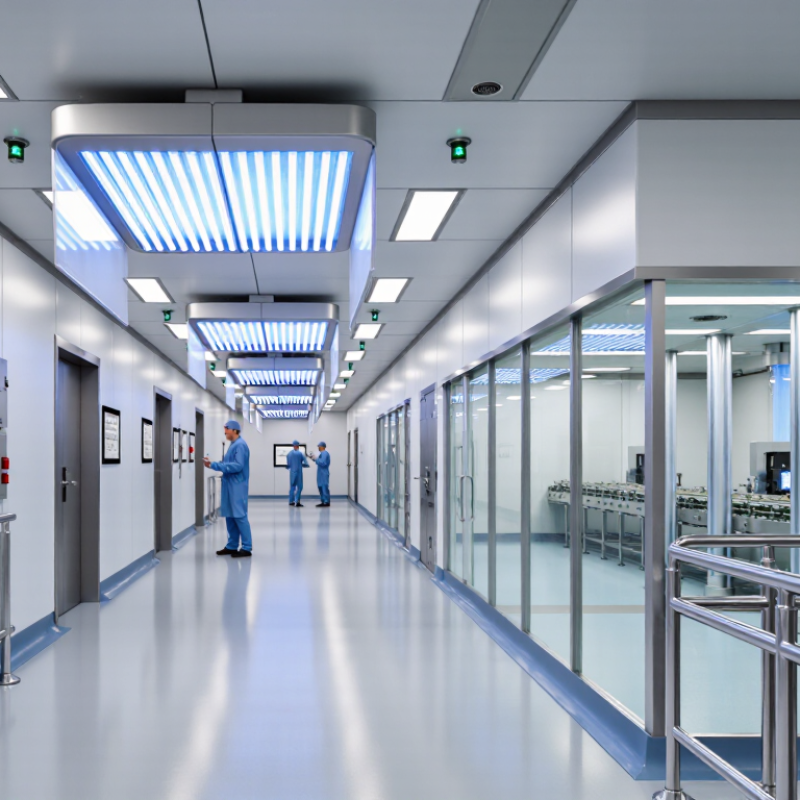
How to Choose Future UV Sterilization Technology

Understanding the Principles of UV Sterilization Technology

Choosing future UV sterilization technology requires understanding how UV actually works. UV-C light damages microbial DNA and RNA, preventing replication. The delivered dose depends on intensity and exposure time. Higher lamp power does not always mean better treatment. Flow speed, water clarity, surface distance, and shadowing can reduce effectiveness.

The word sterilization may overstate performance. UV systems usually inactivate microorganisms, but they do not remove particles or chemical contaminants. Reliable selection requires dose validation under real operating conditions. A professional assessment should examine sensor accuracy, lamp aging, cleaning access, and safety interlocks. Testing at the highest flow rate is important. It is easy to design for ideal conditions.

Tips: Measure delivered UV dose, not only lamp wattage. Check turbidity and transmittance before installation. Inspect quartz sleeves regularly. Test performance after maintenance. Keep clear records.

Future systems should provide transparent data and simple verification. Independent testing can support technical claims and build user confidence. Smart controls may adjust output as conditions change, but automation cannot replace physical inspection. A sensor can drift. A clean-looking chamber can still have deposits. This is where practical judgment matters. Choose technology that remains effective when water quality changes, operators rotate, and maintenance is delayed slightly. That standard is less exciting, but more reliable.

Identifying Application Requirements and Sterilization Targets

How to Choose Future UV Sterilization Technology

Identifying application requirements and sterilization targets should guide every UV technology decision. Start by describing the real environment. Is the system treating drinking water, air, surfaces, or process equipment? Record flow rate, temperature, humidity, turbidity, and exposure distance. These details affect UV performance. A clear chamber may still contain shaded areas or uneven flow paths. In practice, these weak points often determine the final result.

Define the target organism and required reduction level before comparing equipment. Bacteria, viruses, and spores can respond differently to ultraviolet exposure. Use validated dose data, not only lamp power or marketing claims. Consider sensor accuracy, cleaning intervals, lamp aging, and automatic shutdown functions. A design should also prove that the delivered dose remains reliable during normal operation. That sounds obvious, but maintenance conditions are often underestimated. Perfect assumptions rarely survive a busy facility.

Tips: Map the treatment area before selecting technology. Measure the darkest or most distant point. Test samples under realistic conditions. Keep records of dose, flow, and maintenance results. Ask an independent specialist to review the validation plan when the application carries health or production risks. A useful design leaves room for uncertainty, because actual water quality, dust, and equipment aging may differ from early estimates.

Comparing UV-C, Far-UVC, and Emerging UV Technologies

Choosing future UV sterilization technology requires more than checking wavelength charts. In facility assessments, I look at dose, airflow, surface distance, maintenance, and human exposure. Conventional UV-C, commonly around 254 nanometers, remains practical for enclosed ducts, chambers, and unoccupied rooms. It can inactivate many microorganisms when the delivered dose is sufficient. The word delivered matters. Dust, shadows, lamp aging, and poor placement can reduce real performance.

Far-UVC, often near 222 nanometers, is attracting attention for occupied spaces. Its shorter wavelength may limit penetration into living tissue, but safety depends on the complete system, not the label. Exposure limits, ozone generation, shielding, and independent photobiological testing must be checked. Research is promising, yet field evidence and long-term operating data are still developing. I would not treat early laboratory results as automatic proof of room-scale protection.

Emerging options include UV-C LEDs, pulsed UV sources, and integrated sensor systems. LEDs may offer compact designs and instant control, although output, heat management, and cost remain difficult trade-offs. Sensor feedback can reveal blocked airflow or declining intensity. It cannot repair bad installation. Ask for measured irradiance, validated microbial testing, maintenance records, and clear user instructions. A technology that looks advanced may perform poorly after six months. That uncomfortable possibility deserves attention. Compare independent evidence with your actual room, not a showroom demonstration.

How to Choose Future UV Sterilization Technology: Comparing UV-C, Far-UVC, and Emerging UV Technologies

Evaluation Dimension Conventional UV-C Far-UVC UV-C LED Systems Other Emerging UV Technologies
Typical wavelength range Approximately 200–280 nm. Low-pressure mercury systems commonly emit near 254 nm. Approximately 200–230 nm. Many current research and pilot systems operate near 222 nm. Commonly approximately 255–280 nm, depending on the LED design. May include pulsed ultraviolet systems, excimer sources, and multi-wavelength or filtered UV architectures.
Primary inactivation mechanism UV photons damage microbial DNA or RNA, preventing replication and reducing infectivity. Shorter-wavelength photons are strongly absorbed by proteins and other biological materials, limiting penetration into living tissue while still damaging microbial genetic material. Uses the same photochemical mechanism as conventional UV-C, with wavelength selected for the target organism and application. Mechanisms vary. Pulsed systems deliver high peak irradiance, while multi-wavelength designs may combine direct photochemical damage with surface or air-treatment effects.
Effectiveness against microorganisms Effective against many bacteria, viruses, fungi, and protozoa when the delivered dose is sufficient. Laboratory and early field studies indicate strong activity against airborne pathogens, but performance depends heavily on dose, airflow, humidity, and exposure time. Can provide effective inactivation when sufficient optical output and exposure time are available. Performance varies considerably among devices. Potentially effective, but results are highly system-specific and must be validated using measured dose and microbiological testing.
Required dose and exposure control Requires a verified UV dose, calculated from irradiance multiplied by exposure time. Shadows, distance, airflow, and surface geometry can reduce delivered dose. Requires continuous control of irradiance and exposure duration because safe-use limits still apply and real-world pathogen susceptibility varies. Requires careful thermal management, optical design, and irradiance mapping because LED output can be directional and non-uniform. Often requires specialized dose measurement because short, intense pulses or mixed spectra may not be represented accurately by ordinary UV meters.
Human exposure considerations Direct exposure can injure skin and eyes. Occupied-space use normally requires shielding, interlocks, occupancy controls, or an upper-room design that prevents exposure at eye level. Designed to reduce penetration into living tissue, but it is not automatically risk-free. Exposure must remain within applicable occupational and public exposure limits, and the spectrum must be controlled. Direct exposure presents the same fundamental UV-C hazards as other germicidal UV sources at comparable wavelengths and doses. Safety depends on wavelength, spectrum, pulse energy, shielding, ozone generation, and the possibility of leakage outside the treatment zone.
Suitability for occupied spaces Generally suitable only when installed as shielded upper-room units, enclosed air handlers, or fully enclosed equipment. Potentially suitable for continuously occupied spaces when the source is properly filtered, installed, monitored, and operated within exposure limits. Suitable for occupied spaces only when used in enclosed systems or with engineered shielding and exposure controls. Usually better suited to enclosed chambers, automated equipment, or controlled industrial environments until safety and reliability are fully demonstrated.
Air treatment potential Well established for upper-room germicidal systems and in-duct air disinfection when airflow and UV dose are properly designed. Strong potential for continuous in-room air treatment because the short wavelength is intended to limit tissue penetration; field validation remains important. Useful for compact in-duct and portable air-treatment equipment, although airflow resistance, heat removal, and optical output must be managed. May provide rapid air treatment in specialized reactors, but pressure drop, residence time, energy use, and dose uniformity require application-specific validation.
Surface and water treatment Well established for exposed surfaces and clear water. Turbidity, organic matter, shadows, and surface texture can reduce performance. Less established for broad surface and water applications because penetration is shallow and the technology is primarily being evaluated for air and near-surface use. Promising for point-of-use water, surface, and equipment disinfection, particularly where compact size and instant switching are valuable. Can be useful for automated surface treatment or complex geometries, but validation must account for shadowing, reflection, material compatibility, and dose distribution.
Energy and operating profile Often provides high optical output at relatively mature system efficiencies. Mercury-containing lamps require warm-up or controlled switching in some designs. Efficiency and lifetime depend strongly on the source technology, optical filtering, and power supply. Systems may require careful spectral monitoring. Instant on/off operation, dimming, digital control, and mercury-free construction are important advantages. Electrical efficiency and cost remain application-dependent. May achieve high peak power or specialized treatment performance, but power electronics, cooling, and control complexity can increase total energy demand.
Maintenance and service life Requires periodic cleaning and replacement because lamp output declines over time. Quartz or protective covers must remain clean. Requires monitoring of source output and filter integrity. Long-term maintenance data are still developing for many configurations. LED output gradually declines rather than failing suddenly. Thermal management and heat-sink cleanliness strongly influence useful life. Maintenance requirements vary widely and may include pulse-lamp replacement, reflector cleaning, filter inspection, and calibration of high-voltage components.
Ozone and by-products Sources below approximately 240 nm can generate ozone from oxygen; 254 nm systems generally produce little ozone unless shorter-wavelength leakage is present. Ozone generation depends on the exact spectrum and source construction. Unwanted wavelengths must be filtered or otherwise controlled. Most germicidal UV-C LEDs are designed to operate above the strongest ozone-forming region, but the complete spectral output should be verified. Ozone and other by-products depend on the emitted spectrum, pulse characteristics, air chemistry, and treated materials; ventilation and monitoring may be necessary.
Material compatibility Repeated UV-C exposure can degrade plastics, elastomers, coatings, fabrics, and some electronic components through photochemical aging. Material compatibility data are less extensive. Even when human-tissue penetration is limited, exposed materials may still experience UV aging. Material damage depends on wavelength, dose, and exposure duration; localized high irradiance can create uneven aging. High peak irradiance or broad spectra may accelerate discoloration, embrittlement, or coating damage and should be tested before deployment.
Technology maturity Mature
Widely used in air, water, and equipment disinfection, with established engineering practices and dose-based validation methods.
Developing
Promising for occupied-space air treatment, but long-term exposure evidence, field performance, and regulatory interpretation continue to evolve.
Commercially advancing
Flexible and increasingly capable, although output, thermal design, cost, and lifetime differ significantly by system.
Application-specific
Some approaches are commercially available while others remain at pilot or research stage and require independent validation.
Best-fit applications HVAC air handlers, upper-room systems, water treatment, enclosed chambers, laboratory equipment, and industrial process lines. Potentially occupied indoor air treatment, especially where continuous operation and low-height installation are required. Compact water devices, HVAC modules, robotic equipment, point-of-use systems, sensors, and applications requiring rapid electronic control. High-throughput industrial chambers, automated surface treatment, specialized reactors, and applications needing pulsed or tailored spectral output.
Key purchasing criteria Verified dose, irradiance distribution, shielding, interlocks, lamp life, ozone control, maintenance access, and compatibility with the target environment. Verified spectral output, exposure-limit compliance, filter performance, irradiance monitoring, source stability, airflow design, and independent safety testing. Measured optical power, wavelength stability, thermal design, LED degradation rate, driver reliability, dose uniformity, and total cost of ownership. Independent microbiological validation, pulse-dose measurement, safety certification, by-product testing, material compatibility, and service capability.
Overall selection guidance Choose when a proven, dose-based solution is needed and the treatment zone can be enclosed, shielded, or otherwise controlled. Choose only after confirming the exact spectrum, exposure limits, installation geometry, and evidence for the intended indoor-air use. Choose when compact size, instant control, mercury-free construction, and integration flexibility justify potentially higher system cost or lower output. Choose for specialized processes where conventional sources cannot meet throughput, geometry, or control requirements, and require application-specific validation before scale-up.

Note: UV performance depends on delivered dose, wavelength, irradiance, exposure time, humidity, distance, airflow, surface geometry, and the resistance of the target microorganism. No UV system should be operated in a way that exposes people beyond applicable safety limits.

Evaluating Safety, Efficiency, Maintenance, and Operating Costs

Choosing future UV sterilization technology requires more than comparing ultraviolet intensity or purchase prices. Safety should guide the evaluation. A well-designed system includes shielding, door interlocks, warning indicators, and automatic shutoff controls. Operators should receive practical training, not just a manual. During site assessments, inspect exposure risks around access panels, reflections, and maintenance openings. Small gaps can create serious hazards.

Efficiency depends on dose, exposure time, airflow, water quality, and surface distance. A lamp may appear powerful but perform poorly in a dusty chamber or crowded duct. Request independent test data using conditions similar to your facility. Measure output over time, because UV intensity gradually declines. Real performance matters.

Maintenance often determines operating cost. Check lamp replacement intervals, sensor calibration needs, cleaning procedures, spare-part availability, and service access. A system requiring frequent shutdowns may cost more than its energy rating suggests. Record power consumption, downtime, labor hours, and replacement parts each month. Simple records reveal hidden expenses. No system is maintenance-free. Future designs may include better sensors and automated alerts, but those features can increase complexity. I would still question impressive efficiency claims without long-term field evidence, clear testing methods, and realistic operating assumptions.

Selecting and Implementing the Most Suitable UV System

Selecting and implementing a suitable UV system requires more than comparing lamp wattage. Start with the water or air profile. Measure flow, UV transmittance, turbidity, temperature, and contaminant load. The U.S. EPA’s Ultraviolet Disinfection Guidance Manual stresses validated dose delivery, sensor accuracy, and reactor hydraulics. These factors matter more than advertised output.

For drinking water, the WHO/UNICEF Joint Monitoring Programme reported that 2.2 billion people lacked safely managed drinking water in 2022. This pressure encourages scalable treatment, but future systems must remain serviceable in difficult locations. UV-C LEDs may offer instant operation and flexible control. Conventional lamps can still provide stronger output in some high-flow applications. The correct choice depends on validated dose, energy use, lamp life, cleaning needs, and local maintenance skills.

Implementation should include a bypass alarm, automatic wiping, calibrated intensity sensors, and recorded operating data. Experienced teams should test performance under worst-case UV transmittance, not only clean laboratory conditions. A 40 mJ/cm² target may suit one application, but it cannot be copied blindly across all pathogens or reactors. Some assumptions will fail. That is normal. Regular validation and independent sampling expose those weaknesses before they become operational risks. In practice, a slightly less advanced system with reliable maintenance may outperform a sophisticated system that staff cannot service.

How to Choose Future UV Sterilization Technology

Selecting and implementing the most suitable UV system requires balancing UV-C output efficiency, operating life, and application requirements.

The chart shows representative industry ranges for common UV-C technologies. Low-pressure mercury systems generally provide high UV-C efficiency and long operating life, while UV-C LED systems offer instant switching, compact design, and mercury-free operation. Actual performance depends on wavelength, dose, temperature, airflow, reactor design, and maintenance conditions.

FAQS

How does UV-C treatment affect microorganisms?

UV-C light damages microbial DNA and RNA. This prevents replication. It usually inactivates organisms rather than removing them.

Does higher lamp power always provide better treatment?

No. Delivered dose depends on intensity and exposure time. Fast flow, cloudy water, distance, and shadows can reduce performance.

What information should be measured before selecting a UV system?

Measure flow, UV transmittance, turbidity, temperature, and contaminant load. These details describe actual operating conditions.

Why should lamp wattage not be the main selection measure?

Wattage shows input power, not delivered UV dose. Dose validation gives a more realistic performance picture.

What maintenance does a UV system require?

Inspect quartz sleeves for deposits. Check sensors, cleaning access, lamp condition, and recorded operating data. Small deposits matter.

Should testing use clear laboratory water?

No. Test at the highest flow rate and the lowest expected UV transmittance. Clean conditions can create false confidence.

Can smart controls replace physical inspection?

No. Sensors can drift, and a clean-looking chamber may hide deposits. Automation helps, but inspection remains necessary.

Is a dose target suitable for every application?

No. A target such as 40 mJ/cm² cannot be copied blindly. Reactor design and microorganism resistance must be considered.

What safety and operating features should implementation include?

Include a bypass alarm, calibrated intensity sensors, automatic wiping, and clear operating records. These features support safer verification.

Is the most advanced system always the best choice?

Not necessarily. A simpler system may perform better when local staff can maintain it reliably. That point is easy to underestimate.

Conclusion

Choosing the right future UV sterilization technology begins with understanding how ultraviolet energy disrupts microbial DNA and RNA, preventing microorganisms from reproducing. The most suitable system depends on the application, target pathogens, treatment environment, exposure time, airflow or water flow, and required level of microbial reduction. Conventional UV-C remains practical for many controlled applications, while Far-UVC and emerging technologies may offer new possibilities where lower exposure risks, improved energy use, or broader deployment are important.

A complete evaluation should compare safety controls, sterilization efficiency, coverage, installation requirements, maintenance needs, lamp or component lifespan, energy consumption, and total operating costs. Future Trends In UV Sterilization Technology are expected to focus on smarter monitoring, automated dose control, improved energy efficiency, and systems designed for easier integration into buildings, water treatment processes, and industrial equipment. By matching technical performance with real operating conditions and establishing clear maintenance procedures, users can select and implement a reliable UV solution that supports consistent, safe, and cost-effective sterilization.

Sienna

Sienna

Sienna is a skilled marketing professional with a deep expertise in our company’s core products and services. With a passion for innovation and detail, she plays a pivotal role in crafting insightful blog posts that not only highlight the unique features of our offerings but also provide valuable......