Top 10 Benefits of UV Disinfection in Water Treatment Systems?

Time:2026-06-10 Author:Ethan
0%

Water is a vital resource for all living organisms. However, contaminants in water can pose serious health risks. This dilemma has driven the industry to seek effective treatment methods. Among these, ultraviolet (UV) disinfection has gained notable attention. It plays a significant role in modern water treatment systems. According to a 2022 report by the World Health Organization, UV systems can reduce pathogens by up to 99.99%. This capability showcases how UV disinfection supports water treatment systems efficiently and safely.

The advantages of UV disinfection are profound. Unlike chemical methods, UV does not introduce harmful byproducts. This makes it an attractive option for municipalities and industries alike. Recent studies revealed that facilities using UV technology reported lower instances of waterborne diseases. Such outcomes underline UV’s effectiveness and reliability in maintaining public health. However, implementation challenges exist. Not all facilities have the budget or infrastructure for this technology. This warrants a careful assessment of resources before adopting UV systems.

Innovative technologies continue to evolve, enhancing UV disinfection's efficiency. For instance, new reactors allow for better UV light penetration. This advancement could lead to even higher pathogen reduction rates. The ongoing development encourages deeper reflection on current practices. Balancing innovation with practical considerations remains essential for successful integration into water treatment systems.
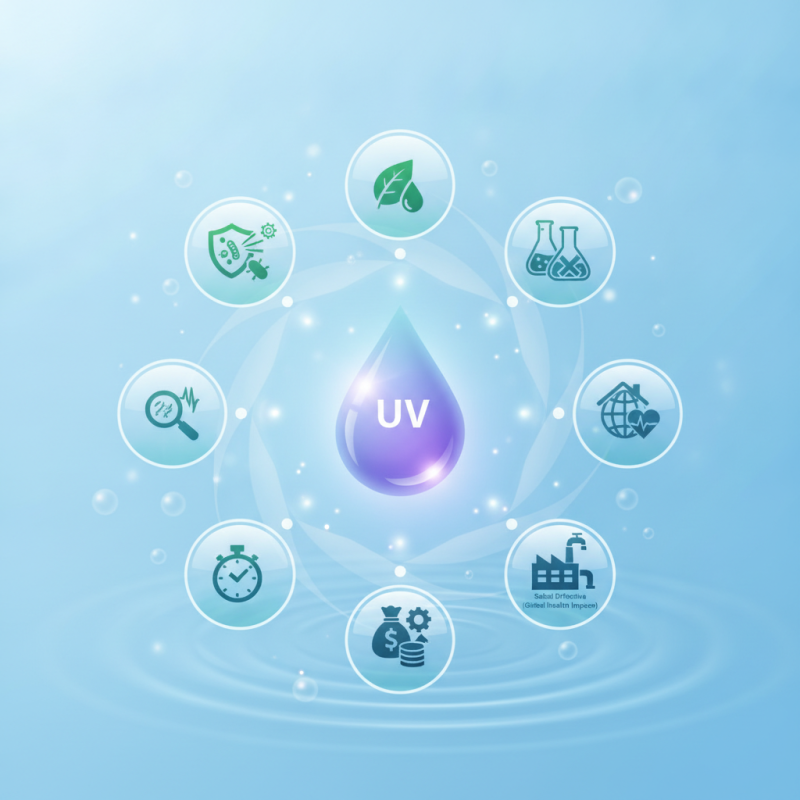
Top 10 Benefits of UV Disinfection in Water Treatment Systems?

Overview of UV Disinfection Technology in Water Treatment

Ultraviolet (UV) disinfection is a vital technology in water treatment systems. It employs UV light to eradicate harmful microorganisms. This method is effective against bacteria, viruses, and protozoa. By targeting the DNA of these pathogens, UV light prevents their reproduction. Thus, treated water becomes safer for consumption.


One major advantage of UV disinfection is its speed. The process requires only a few seconds of exposure to achieve significant microbial reduction. No chemicals are added during this process, preserving water quality. Another critical aspect is that UV disinfection leaves no residuals. This means that there are no harmful byproducts for users to worry about later. However, the system requires maintenance, as the effectiveness depends on the clarity of water. If the water is turbid, UV penetration can be compromised.


While the potential is immense, challenges exist. Factors like lamp intensity and flow rate must be optimized. Moreover, UV disinfection does not remove chemical contaminants. It highlights the importance of a comprehensive treatment approach. Understanding these nuances can drive better decision-making in water management. Investing in UV technology offers clear benefits, but shadows of uncertainty linger around its limitations.

How UV Disinfection Enhances Microbial Safety in Water Sources

UV disinfection plays a crucial role in enhancing microbial safety in water sources. This method eliminates harmful bacteria and viruses effectively. According to the World Health Organization, UV treatment can achieve a 99.9% reduction in pathogens. This capability is vital for public health and safety, especially in areas lacking access to reliable water treatment.

UV disinfection operates without chemicals. This reduces the risk of harmful by-products. Recent studies show that up to 70% of disinfectants can leave residual chemicals in water. Such chemicals can pose health risks. In contrast, UV light breaks down pathogens at the molecular level, ensuring water remains clean and safe without additional contaminants.

However, reliance on UV disinfection requires careful monitoring. Factors such as water clarity can impede UV efficacy. A study by the American Water Works Association noted that turbid water can reduce UV penetration. This highlights the necessity for pre-treatment processes, ensuring optimal UV performance. Ongoing research is essential for developing robust solutions for varied water quality challenges.

Top 10 Benefits of UV Disinfection in Water Treatment Systems

The chart above illustrates the top benefits of UV disinfection in water treatment systems, highlighting key areas such as microbial safety, cost-effectiveness, and environmental impact. Each benefit is rated on a scale from 1 to 10, showcasing their importance in enhancing water quality and safety.

Environmental Benefits of UV Disinfection in Water Treatment Systems

UV disinfection in water treatment systems offers significant environmental benefits. This process uses ultraviolet light to inactivate pathogens without harmful chemicals. According to the Centers for Disease Control and Prevention (CDC), UV systems can reduce up to 99.9% of microorganisms. This reduction helps protect ecosystems by minimizing chemical runoff.

Using UV disinfection decreases the need for chlorine and other harsh disinfectants. These chemicals can produce harmful byproducts that contaminate water sources. A study in the journal Environmental Science & Technology highlighted that UV treatment results in fewer harmful disinfection byproducts. This is crucial for maintaining water quality.

Moreover, UV disinfection is energy efficient. The technology requires less energy compared to thermal or chemical methods. The World Health Organization states that UV treatment plants can reduce energy consumption by up to 30%. However, the initial cost of UV systems may be a barrier for some municipalities. Investments in UV can lead to long-term savings and greater sustainability.

Cost-Effectiveness of Implementing UV Disinfection Solutions

Implementing UV disinfection systems in water treatment can be highly cost-effective. These systems reduce reliance on chemical treatments, which can be expensive and require careful handling. UV technology operates by exposing water to ultraviolet light, effectively inactivating pathogens in a fraction of the time. This rapid process can lead to significant savings on labor and time.

One consideration is the initial investment in UV equipment. While costs can be higher upfront, long-term savings often outweigh these expenses. Maintenance is straightforward, but users must ensure regular checks to maximize effectiveness. Not all UV systems are created equal; effectiveness can vary based on water quality and flow rates. Evaluating needs is essential before making decisions.

Another aspect is energy consumption. UV lamps typically use less energy than many traditional disinfection methods. However, ensuring that systems are appropriately sized can prevent unnecessary energy use. A poorly matched system may lead to inefficiencies, resulting in higher operational costs over time. It is crucial to conduct a thorough assessment before implementation. By addressing these factors, organizations can better navigate the financial landscape of UV disinfection solutions.

Comparison of UV Disinfection with Traditional Water Treatment Methods

UV disinfection offers distinct advantages when compared to traditional water treatment methods. Unlike chemical treatments, which can introduce harmful byproducts, UV systems use light to eradicate pathogens. This prevents unwanted chemical residues, making water safer for consumption. A significant benefit is the speed of UV disinfection. Water is treated instantly as it passes through the UV chamber.

Another critical aspect is the effectiveness against a wide range of microorganisms. UV light can attack bacteria, viruses, and protozoa. Traditional methods may struggle with certain resistant strains. However, UV systems can be less effective if water quality varies. For instance, high turbidity can hinder UV penetration, presenting challenges that require careful monitoring.

The reliance on electricity for UV systems raises concerns about energy efficiency. In regions with unstable power supplies, this could cause interruptions. Furthermore, UV disinfection does not provide residual protection, meaning post-treatment contamination is still possible. Users must consider these limitations when evaluating their water treatment options. Exploring multiple methods may lead to a more robust and reliable water treatment strategy.

FAQS

: What is UV disinfection in water treatment?

: UV disinfection uses ultraviolet light to kill harmful microorganisms in water, making it safer for consumption.

How quickly does UV disinfection work?

The process takes only seconds to significantly reduce microbes in water, leading to faster treatment times.

Are there any chemicals used in UV disinfection?

No chemicals are added during UV disinfection, preserving the quality of treated water without harmful byproducts.

What affects the effectiveness of UV disinfection?

The clarity of the water is crucial. Turbid water can hinder UV light penetration, reducing system effectiveness.

What are the cost considerations for implementing UV systems?

Initial costs can be high, but long-term savings on chemicals and labor often outweigh these expenses.

How does UV disinfection compare to traditional water treatment methods?

Unlike chemical methods, UV disinfection leaves no harmful residues and treats water instantly, but has limitations.

Why is maintenance important for UV systems?

Regular checks are necessary to ensure optimal performance, as the system's effectiveness depends on water quality.

What energy concerns exist with UV disinfection?

While UV lamps typically use less energy, improperly sized systems can lead to inefficiencies and increased costs.

Can UV disinfection remove chemical contaminants?

No, UV disinfection does not eliminate chemical contaminants, which requires a comprehensive treatment approach.

What challenges arise from using UV disinfection systems?

Factors like water quality and energy supply stability can affect the reliability and performance of UV disinfection systems.

Conclusion

Ultraviolet (UV) disinfection technology offers significant advantages in water treatment systems, enhancing microbial safety and contributing to environmental sustainability. By effectively inactivating pathogens without the use of chemicals, UV disinfection supports water treatment systems by ensuring cleaner, safer water for consumption and usage. This technology not only improves the quality of water by reducing harmful microorganisms but also minimizes the ecological impact associated with traditional treatment methods.

Moreover, the implementation of UV disinfection solutions can be cost-effective, as it reduces the need for chemical additives and lowers operational costs over time. When comparing UV disinfection with conventional water treatment approaches, the former emerges as a more efficient and environmentally friendly option. Overall, understanding how UV disinfection supports water treatment systems is crucial for fostering safer and more sustainable water management practices.

Ethan

Ethan

Ethan is a seasoned marketing professional with a deep expertise in our company's innovative product line. With a passion for sharing knowledge and insights, he takes the lead in regularly updating our corporate blog, where he explores industry trends, product features, and effective marketing......