 Dextra Light
2026 Best UV Technology for Eco Friendly Sanitation?
As sanitation systems face rising water stress, energy costs, and stricter sustainability expectations, UV technology deserves closer examination in 2026. The WHO/UNICEF Joint Monitoring Programme reported that 3.5 billion people lacked safely managed sanitation in 2022. That gap makes practical, low-chemical treatment options increasingly important.
How UV Technology Supports Eco Friendly Sanitation begins with a simple principle. UV-C light damages microbial DNA without adding disinfectant chemicals to treated water. James R. Bolton, a leading ultraviolet disinfection specialist and co-author of The Ultraviolet Disinfection Handbook, stated, “UV disinfection is a physical process, not a chemical process.” This explains UV’s appeal for decentralized treatment, reuse systems, healthcare facilities, and municipal plants.
The technology still needs disciplined design. The U.S. Environmental Protection Agency’s Ultraviolet Disinfection Guidance Manual stresses validated dose delivery, reliable sensors, lamp maintenance, and hydraulic control. A clear glass sleeve, a calibrated intensity sensor, and clean water flow can determine whether a system works safely. Small details matter.
UV is not automatically green. Electricity demand, lamp manufacturing, mercury management, and replacement schedules affect its full environmental footprint. The International Energy Agency continues to emphasize efficiency and lifecycle performance across energy-using technologies. Therefore, the best 2026 UV solution should combine efficient LEDs or optimized lamps, renewable electricity, durable components, and transparent performance data.
The promise is strong. The assumptions need testing. This article evaluates the evidence, limitations, and practical design choices behind eco-friendly UV sanitation. It also asks a harder question: can lower chemical use remain sustainable when maintenance is neglected?
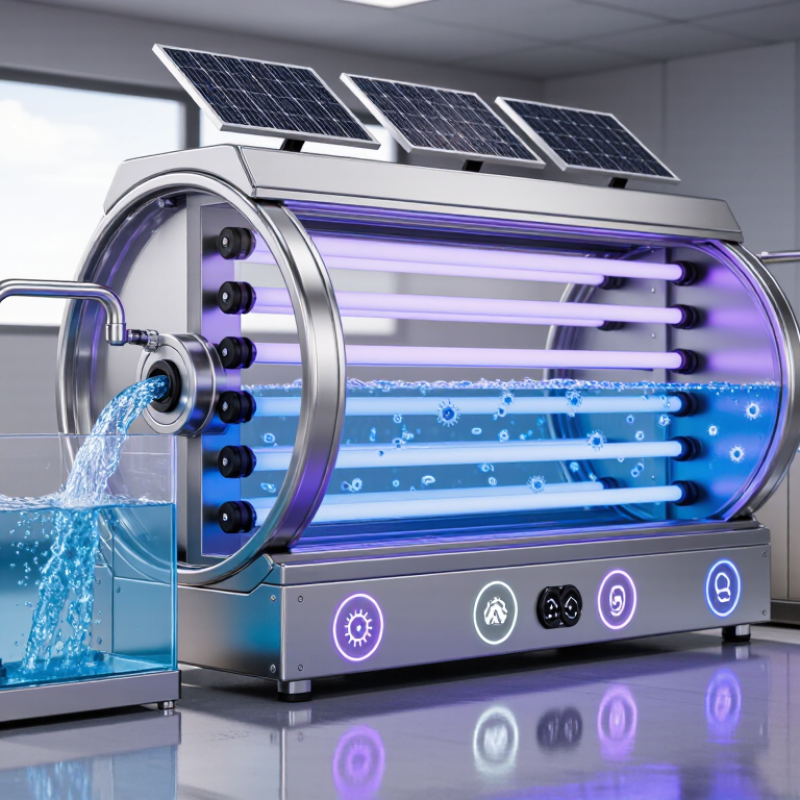
Understanding UV Technology for Eco-Friendly Sanitation in 2026
Understanding UV Technology for Eco-Friendly Sanitation in 2026
Ultraviolet technology is becoming a practical option for lower-impact sanitation. UV-C light can damage the DNA or RNA of microorganisms, preventing them from reproducing. It leaves no chemical residue and does not change water taste or odor. In a small treatment room, operators may notice cleaner surfaces without the sharp smell of disinfectants. That difference matters in schools, clinics, food areas, and public facilities.
Effective sanitation depends on more than switching on a lamp. Water must remain clear enough for light to pass through. Dust, grease, and biofilm can shield microorganisms from exposure. A measured UV dose, correct contact time, and regular lamp cleaning are essential. Sensors can track intensity, while certified testing can verify performance against relevant microorganisms. These controls support reliable decisions instead of optimistic assumptions. Safety also requires shielding, interlocks, and trained maintenance workers because direct UV-C exposure can injure eyes and skin.
UV systems can reduce chemical consumption, but they still use electricity and replacement parts. Their environmental value depends on energy sources, equipment life, and responsible disposal. I would not call every UV installation automatically green. A poorly maintained unit may provide false confidence. Operators should record lamp hours, cleaning dates, and test results. Small mistakes happen. Honest monitoring is what makes the technology more trustworthy. Photocatalytic and far-UVC approaches may expand future options, but independent validation remains necessary before broad adoption.
2026 Best UV Technology for Eco-Friendly Sanitation? – Understanding UV Technology for Eco-Friendly Sanitation in 2026
| Technology Dimension | UV Technology or Design Option | Primary Disinfection Method | UV-C Low-pressure mercury UV-C systems |
Germicidal UV-C, particularly around the 254 nm emission commonly produced by low-pressure lamps, damages microbial DNA or RNA and prevents replication. Performance depends on delivered UV dose, water or air quality, exposure time, and equipment condition. | Mature and energy-efficient for many high-throughput water and air applications. Mercury-containing lamps require controlled handling, collection, and end-of-life recycling. | Suitable where established dose-validation methods, lamp monitoring, and professional maintenance are available. | |
|---|---|---|---|---|---|---|---|
| Emerging UV Source | UV-C LED Ultraviolet light-emitting diodes |
UV-C LEDs can be engineered at different germicidal wavelengths, including ranges near 260–280 nm. They allow compact designs, instant switching, dimming, modular control, and operation without mercury. Actual microbial performance varies with wavelength, optical design, temperature, and dose. | Eliminates mercury from the light source and can reduce standby energy through on-demand operation. Current limitations may include lower optical output, heat-management requirements, and higher system cost in some large-flow installations. | Particularly useful for point-of-use devices, compact equipment, intermittent operation, and systems requiring flexible digital control. | |||
| Air Sanitation | Upper-room or in-duct UV-C systems | Properly designed systems can inactivate airborne microorganisms as air circulates through a treated zone or ventilation duct. Effectiveness depends strongly on air mixing, airflow rate, UV intensity, exposure time, shielding, and room occupancy patterns. | Can supplement ventilation and filtration without creating chemical residues. Energy demand is generally associated with lamps, LEDs, fans, and control equipment. | Requires professional photometric design, shielding against unsafe exposure, routine cleaning, and verification that occupants are not exposed to hazardous UV-C levels. | |||
| Drinking-Water Treatment | Closed-vessel UV reactors | UV treatment can inactivate many bacteria, viruses, and protozoa without adding disinfectant chemicals. It does not normally remove particles, dissolved chemicals, or microorganisms physically; pretreatment may be necessary to reduce turbidity and UV-absorbing substances. | Produces no chlorinated disinfection by-products and usually has a relatively small physical footprint. Electricity consumption depends on flow rate, UV dose, water quality, and reactor efficiency. | Use UV sensors, flow controls, lamp-status monitoring, and a validated dose appropriate for the target microorganisms and water quality. | |||
| Wastewater Reuse | UV disinfection after filtration or biological treatment | UV is widely used as a final disinfection barrier for treated wastewater. Suspended solids and particles can shield microorganisms, so clarified effluent and reliable upstream treatment are important for consistent dose delivery. | Avoids routine chemical storage and can reduce formation of some chemical disinfection by-products. Energy use and lamp fouling must be included in the life-cycle assessment. | Combine UV with filtration, automatic sleeve cleaning, dose pacing, flow measurement, and continuous performance records. | |||
| Surface Sanitation | Enclosed UV-C chambers or validated robotic systems | UV-C effectiveness is highly dependent on distance, angle, shadowing, surface texture, and exposure time. Surfaces not directly reached by sufficient UV dose may remain contaminated. | Can reduce reliance on disposable chemical wipes in controlled settings, but equipment manufacture, battery use, replacement parts, and transportation should be considered. | Prefer enclosed or interlocked equipment. Validate the delivered dose at difficult-to-reach locations and never rely on unshielded UV-C around people. | |||
| Chemical-Free Operation | UV-only disinfection barrier | UV can provide physical inactivation without leaving a disinfectant residual in treated water or air. Because there is no lasting residual, the treated medium can be vulnerable to recontamination after treatment. | Reduces chemical transport, storage, and handling requirements. It does not automatically eliminate all environmental impacts because electricity, replacement components, and disposal remain relevant. | Use hygienic storage and distribution after treatment. For systems requiring a residual, UV may need to be combined with another appropriately controlled barrier. | |||
| Energy Management | Dose-pacing and demand-based controls | Sensors and controllers can adjust UV output or operating status according to flow, occupancy, air movement, or water quality. Safe operation still requires a minimum validated dose under the applicable operating conditions. | Can reduce unnecessary electricity consumption, especially in variable-flow or intermittent-use applications. Savings depend on control quality and the equipment's response range. | Include fail-safe modes, alarm functions, calibration schedules, and data logging so energy reduction does not compromise sanitation performance. | |||
| Maintenance and Reliability | Real-time UV monitoring and automatic cleaning | Lamp aging, sleeve fouling, dust, scale, and water-quality changes can reduce delivered UV intensity. A calibrated UV sensor and cleaning system help identify loss of performance, but they do not replace validation and scheduled inspection. | Extends useful equipment life and helps prevent operation at inefficient conditions. Automatic cleaning can add water, chemical, or mechanical-maintenance requirements. | Record UV intensity, operating hours, flow, alarms, cleaning events, and component replacement dates. | |||
| Human and Environmental Safety | Shielded, interlocked, and access-controlled designs | Direct exposure to germicidal UV-C can injure eyes and skin. Some UV wavelengths can also generate ozone or other photochemical products depending on the source and system design. | Safe containment reduces the need for emergency shutdowns, protects workers, and helps prevent unintended indoor-air impacts. | Use shielding, door interlocks, warning labels, exposure controls, ozone assessment where relevant, and documented operating procedures. | |||
| Best Overall Selection in 2026 | Application-matched hybrid UV strategy | No single UV source is best for every application. Selection should be based on validated dose, target microorganisms, flow or air volume, water quality, exposure geometry, required reliability, and regulatory requirements. | The most eco-friendly option is typically the system that delivers the required sanitation outcome with the lowest combined impact from electricity, materials, chemicals, maintenance, and end-of-life disposal. | Compare total life-cycle performance rather than lamp type alone, and verify claims through independent testing, commissioning, and ongoing monitoring. |
Note: UV performance is application-specific. A qualified design should verify delivered dose, microbial targets, safety controls, energy use, maintenance requirements, and applicable local standards before installation.
FAQS
Conventional UV-C usually operates between 200 and 280 nanometers. It can inactivate microorganisms on exposed surfaces and moving air. Shadows, dust, distance, and poor placement reduce the delivered dose. Direct exposure can harm eyes and skin within seconds. Measurement matters more than lamp brightness.
Far-UVC near 222 nanometers may reduce microorganisms in occupied areas. It still requires exposure controls, monitoring, and careful system design. “Safer” does not mean risk-free. Humidity, air mixing, and wavelength purity affect performance. A pilot room test is wiser than a confident promise.
UV-C LEDs avoid mercury and can support compact, targeted equipment. They may also enable pulsed operation and lower material waste. However, cooling, electronics, electricity use, and service life change the calculation. Their environmental advantage must be measured. Not automatically greener.
A 100-watt unit running continuously uses about 876 kilowatt-hours annually. Timers, occupancy sensors, and variable output can reduce consumption. Energy use depends on operating hours, required dose, and system efficiency. A smaller device may still consume more if it runs constantly. Simple controls matter.
Equipment should use shielding, door interlocks, warning indicators, and leakage testing. Direct UV-C exposure can injure skin and eyes quickly. Systems in occupied spaces need stricter exposure controls. Photobiological risk assessment should be documented. Do not trust appearance alone.
Operators should verify output regularly instead of trusting operating hours alone. Dust on a quartz sleeve can quietly reduce the delivered dose. Aging lamps, dirty sensors, and heat buildup also affect performance. Replacement criteria should be written before failures occur. “Maintenance-free” is usually an exaggeration.
Choose a validated reactor that measures UV intensity and water transmittance. A commonly used validated target is 40 mJ/cm² for certain drinking-water applications. This value is not universal. Cloudy water can reduce performance quickly. The lamp sleeve must remain clean.
UV should support ventilation, not replace it. Air changes still matter. Surface treatment requires direct exposure and controlled distance. Textured materials, shadows, and dust may leave untreated areas. Dose testing after installation can reveal uncomfortable gaps. Specifications look precise, but real buildings are not.
Conclusion
In 2026, UV technology is becoming an important option for eco-friendly sanitation because it can reduce microorganisms without relying heavily on chemical disinfectants. How UV Technology Supports Eco Friendly Sanitation depends on its ability to use ultraviolet energy to disrupt the DNA or RNA of bacteria, viruses, and other microorganisms, preventing them from reproducing. UV-C systems remain widely useful, while Far-UVC may offer additional possibilities for occupied spaces when designed and operated with appropriate safety controls. UV LED systems are also attracting attention because they can be compact, mercury-free, and adaptable to different applications.
The best solution depends on the setting, including drinking water treatment, air purification, surface sanitation, healthcare environments, and household use. When comparing technologies, users should evaluate energy consumption, exposure safety, treatment effectiveness, maintenance needs, equipment lifespan, and end-of-life environmental impact. A well-designed UV sanitation system should provide reliable performance while minimizing waste, chemical use, and unnecessary energy consumption. Proper installation, cleaning, monitoring, and regular replacement of components are essential for maintaining safe and effective operation.
